What if seasonal depression never ended: The Game
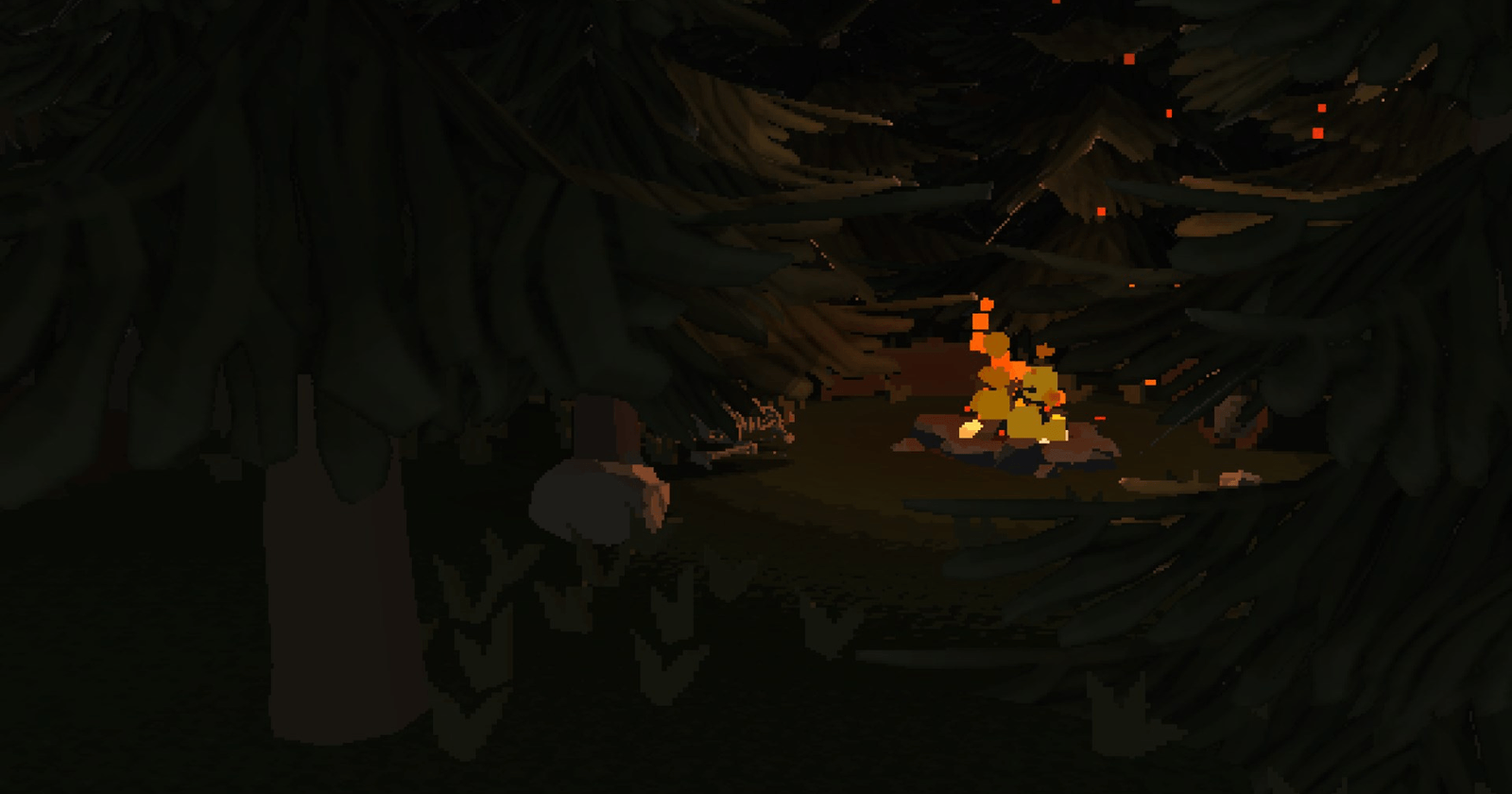
Let’s talk about game development. Codename: Barkbread.
“There is no way in hell it was this dark last year”. I say this every year in December. It never ceases to amaze me how dark it is, and how much it affects people.
If you’ve spent a December in Sweden, you know the light I mean. In Stockholm the sun drags itself up around nine, crawls along the treeline for a few hours and is gone before three. Further north it doesn’t come up at all. What you get is a long blue dusk, snow throwing back whatever light is left, and the feeling that the day is something you’re borrowing.
So what if that December never ended? What if one winter the sun went dark and just stayed dark? That is my dark fantasy white whale. Let’s talk about building it.
People would keep living. But it would change them. Fire would stop being nice to have and become the centre of every life. Every trip into the forest would be a gamble. Neighbours who didn’t share your hearth would become strangers, and strangers would become threats. And anything that helped you remember what was safe and what wasn’t would become precious.
That’s Barkbread, the game I’m making. The demo takes place in Dysterskog (roughly “the gloomy forest”), in a land called Kaldnatt (“cold night”). December came, and never left.
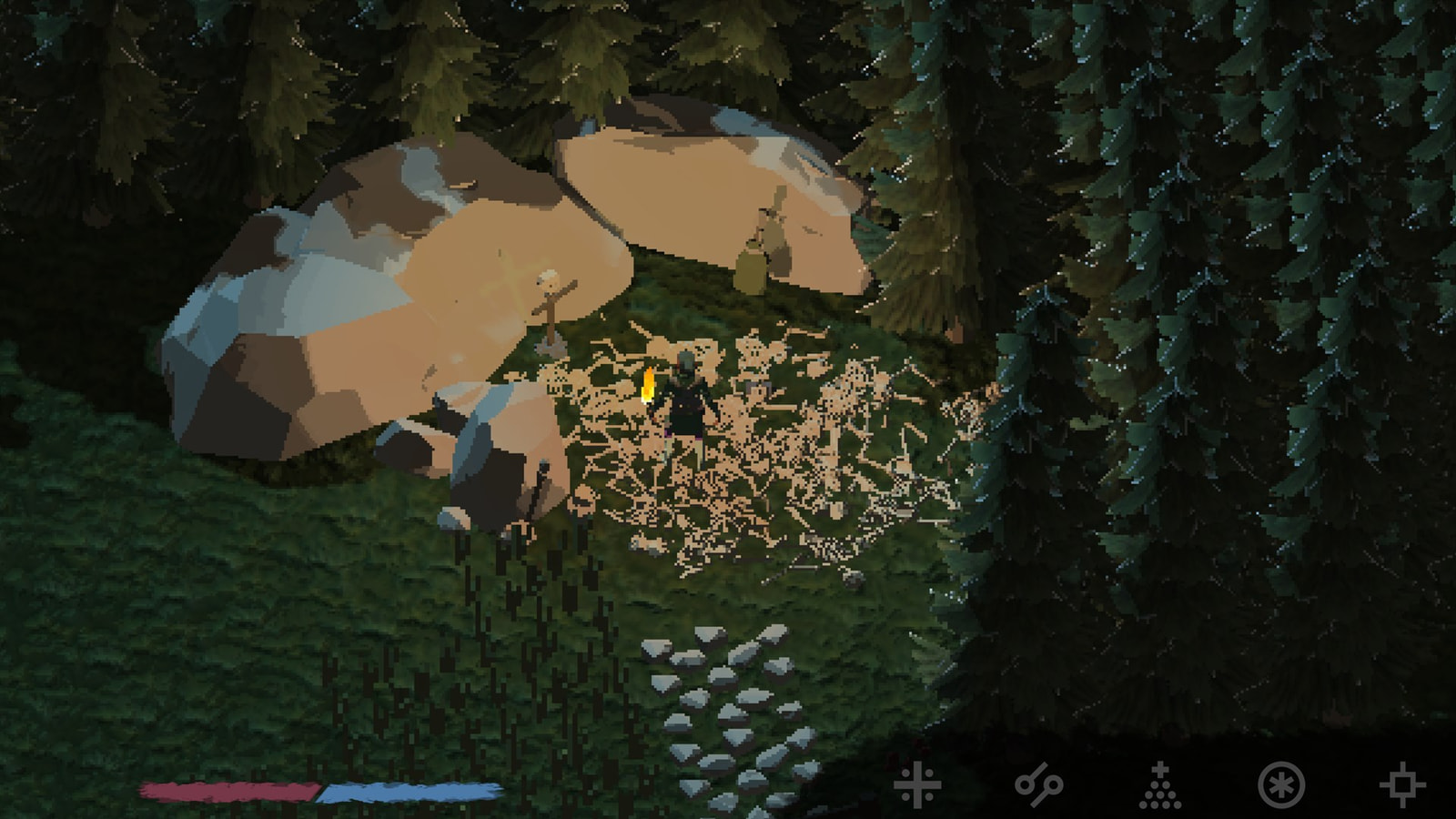 Where it starts: bleeding, among bones, with a torch and no memory.
Pagan Folklore
I want to capture the pagan sweden forest. The old Norse gods are fading and the church hasn’t made it into the deep north yet. Not the Viking age of sagas and raids, and not the Christian medieval world either. The uneasy stretch in between, when the big myths had gone quiet and what was left were the small, local, practical beliefs people lived with every day.
It feels like the most Swedish of all cultural history. And very forgotten.
Hardly anyone could read. Knowledge went from grandmother to grandchild by word of mouth, and the way to make it stick was to tell it as a story. You don’t tell a kid “the lake has cold currents and steep drop-offs, don’t swim alone at night”. You tell them about the näck, who plays his fiddle by the water and drags you under. You don’t say “people who wander off the path in winter die of exposure”. You tell them about the skogsrå, the beautiful woman of the forest who leads men deeper until they’re lost. Mist dancing over a meadow at dusk becomes the elves’ dance, and the warning comes with it: don’t go and look. The farm spirit who punishes a lazy household is just “keep the animals fed and the fire going, or you won’t see spring”.
Every creature carried a rule, and every rule had cost someone their life before it became a story. The stories kept people alive. Cultivating relationships with these creatures was a way to survive, and often the learnings was really scientific, but taught using stories. I want a dark world where they really are true.
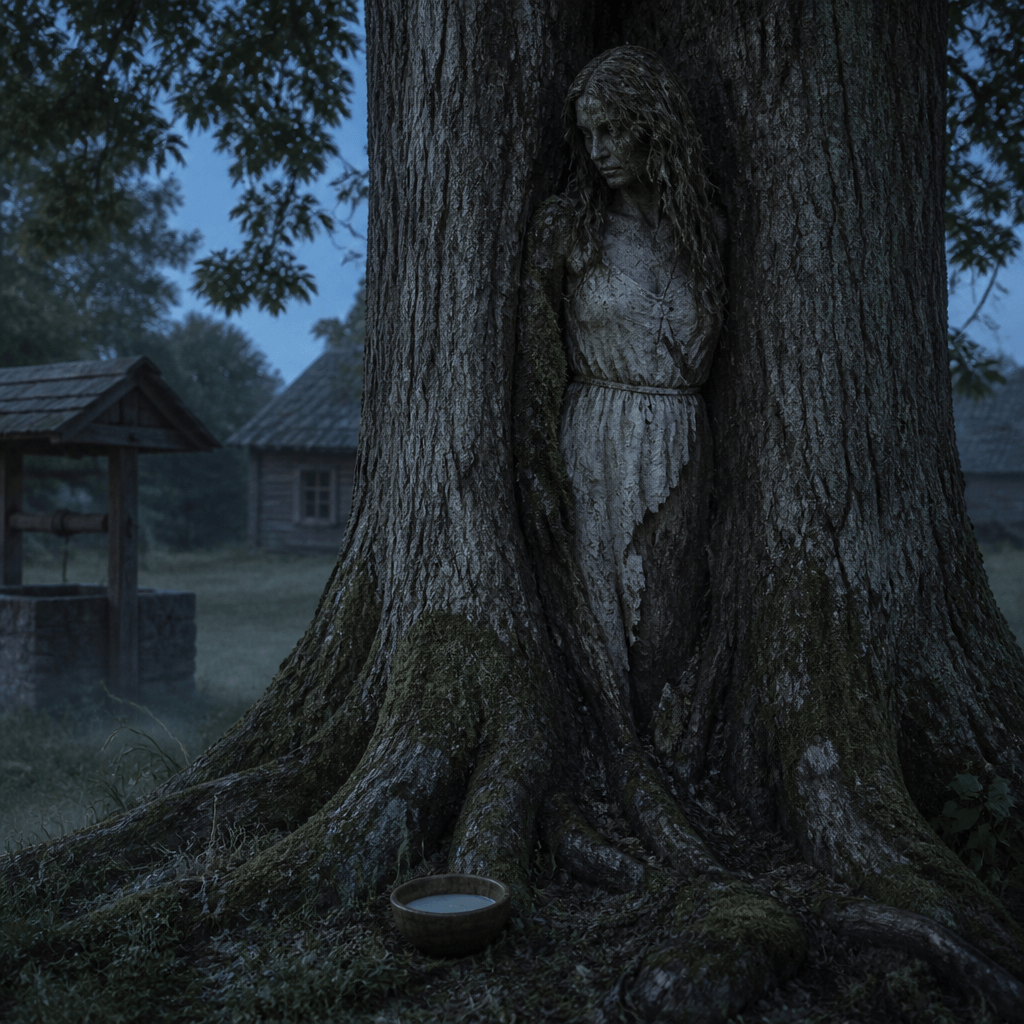 Don’t run after Skogsrået (ráða / metsänpeitto). She’s beautiful, but deadly for all men.
Take away the sun and that manual matters more than ever. So in Barkbread, folklore is knowledge. The trolls, the spirits and the dead in the barrows are real threats, and the old tales about them are the closest thing you have to a guide.
Arguing with Yourself
When I was building Yaengard, I was almost published by ZA/UM, creator of Disco Elysium. The studio ended up in crisis after, so being rejected was probably a good thing. But talking to Chris Priestman (their pbulishing lead and writer), hearing how their founder Robert Kurvitz wanted to build a fantasy RPG, but couldn’t get the eastern european team to love it, and ended up building Disco Elysium instead. They spoke to us at Planeshift Interactive to get to work on that personality-narrative fantasy heroic RPG. Didn’t materialize. But is was cool as hell. I rejected 10+ publishers, but that’s the one that I wanted, and didn’t get.
Barkbread owes a lot to Disco Elysium already, and will owe more in time. One of my favorite games of all time. You rarely face the world alone, because several voices live inside your character, and they all have opinions.
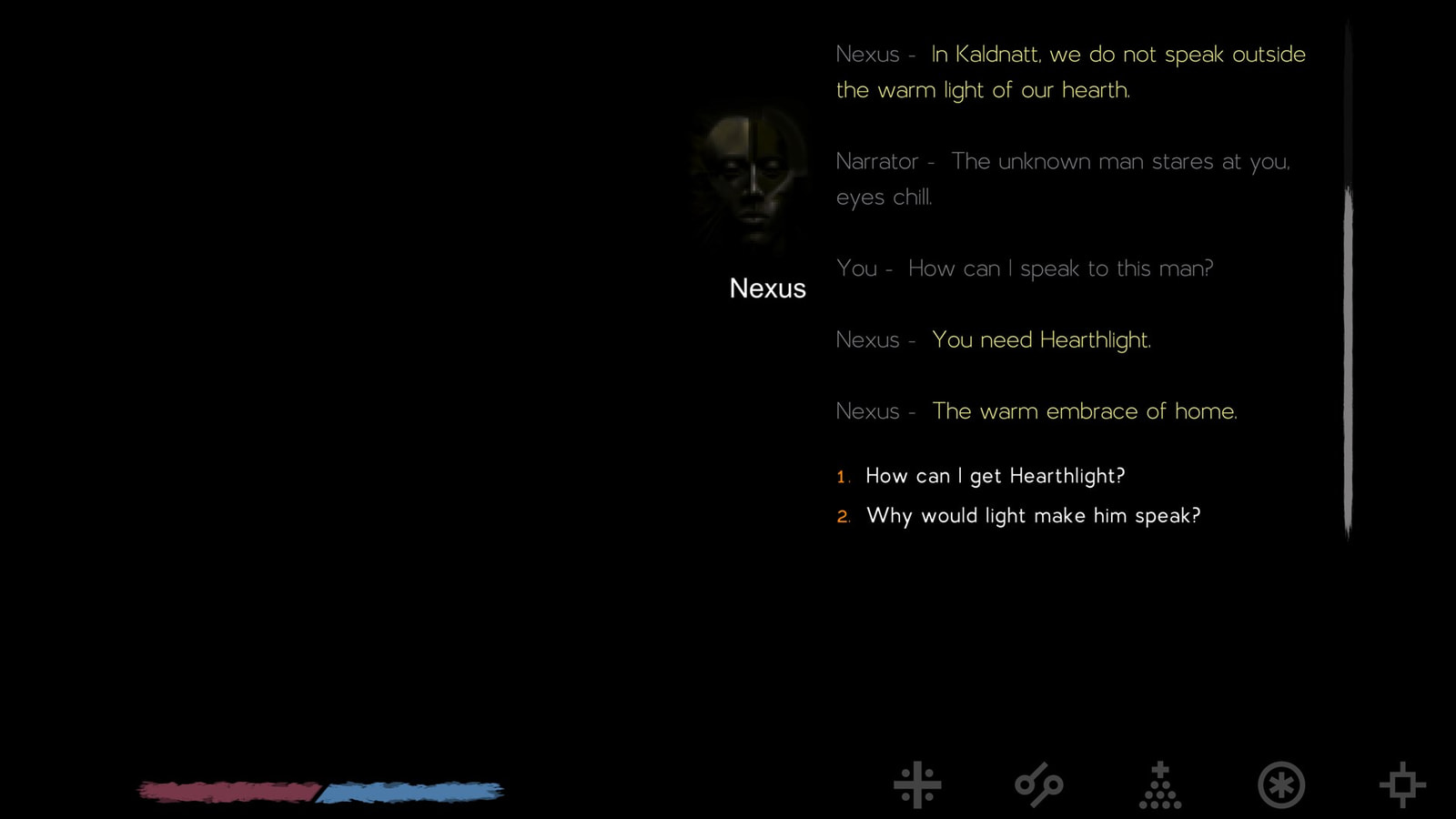 Nexus explaining why the stranger won’t talk to you. You need Hearthlight.
As pieces of your past come back, you pick Truths. Born in War, Born into Belief, Parentless. These aren’t flavour text. Each one permanently changes your character’s numbers, and it changes what the voices know about you, so later conversations react to who you decided you were. A child of war sees the world differently from a child raised on faith, and your voices will tell you so. Sometimes, these truths even change the world around you.
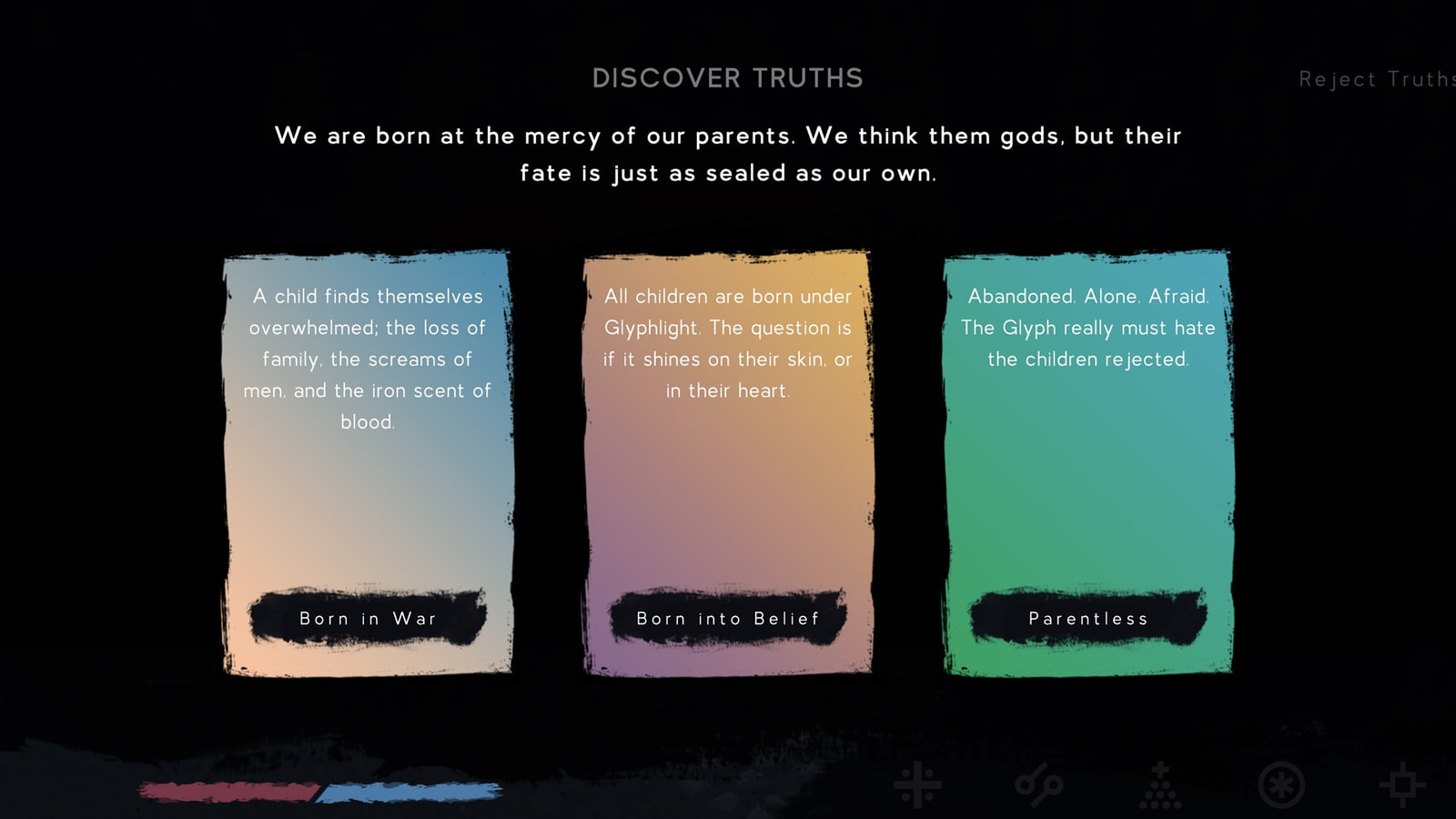 Violent, faithful or abandoned? You decide who you were.
How I want it to play
It’s a slow, top-down RPG. You walk the forest, light fires, search barrows and cellars, talk to the few people willing to talk back, and try to keep two things from running out: Health (the body) and Hope (the will to keep going). Some things in this world don’t cut you. They wear you down.
If you have played Fear & Hunger and Disco Elysium, you know what I am building. Except the heart of it all is the Swedish pagan black forest.
Skill checks decide most of what you try. Prying open a crate, forcing a door or disturbing a grave brings up a small panel with your odds and a handful of slots, and every slot has to succeed.
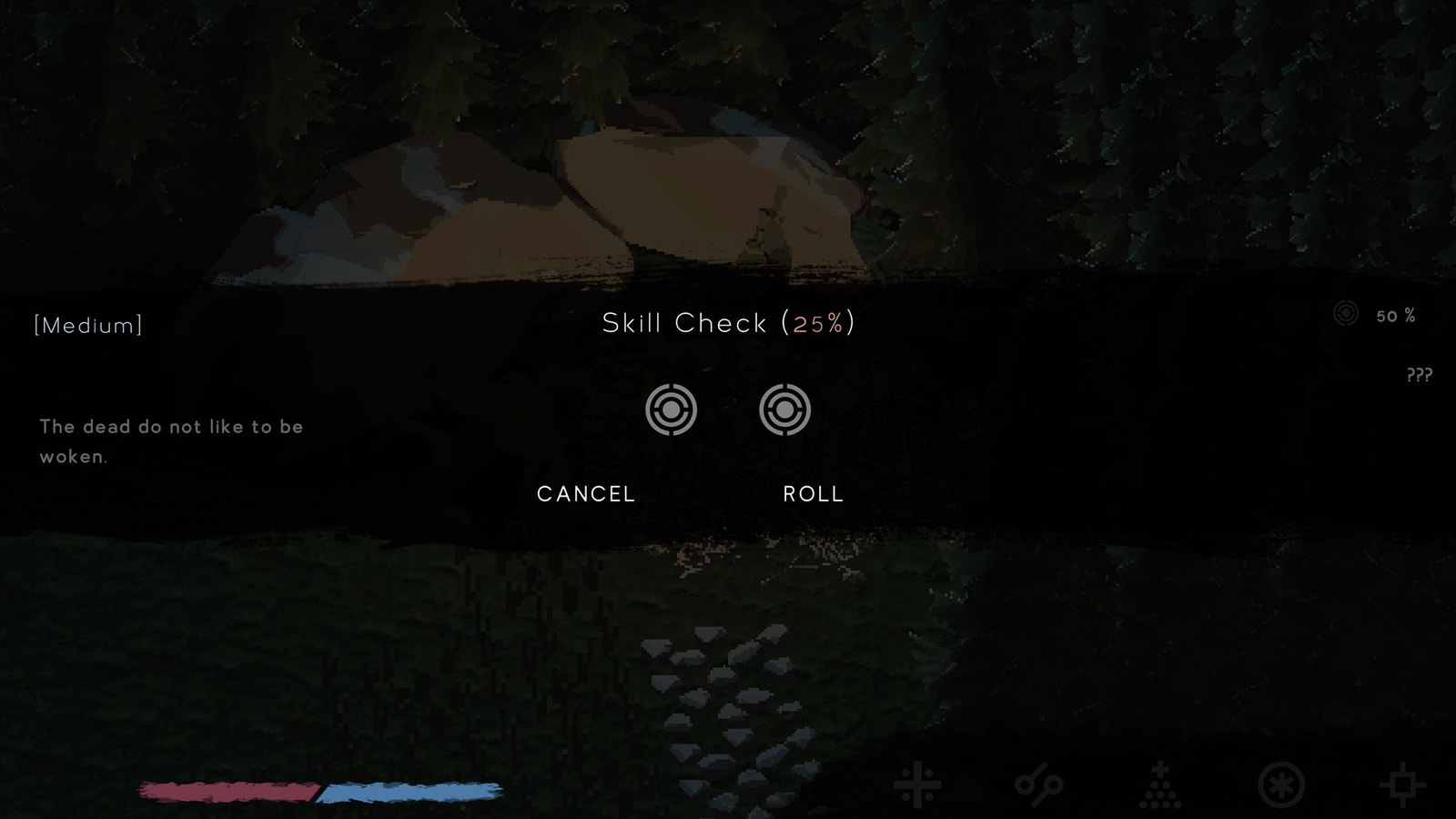 The dead do not like to be woken. 25%, if you’re feeling lucky.
Combat is turn based and unforgiving, in the spirit of Fear & Hunger. You pick an attack, the enemy picks one, and speed decides who strikes first. Weapons are tools first: a woodcutter’s axe, an old hammer, a pickaxe, a skinning knife. And a good hit doesn’t just deal damage, it leaves wounds. An axe opens Heavy Bleeding. A hammer can give you a Broken Leg that only a splint will fix. Filthy bandages stop the bleeding and might give you an Infection, which can turn into The Rot.
Ouch.
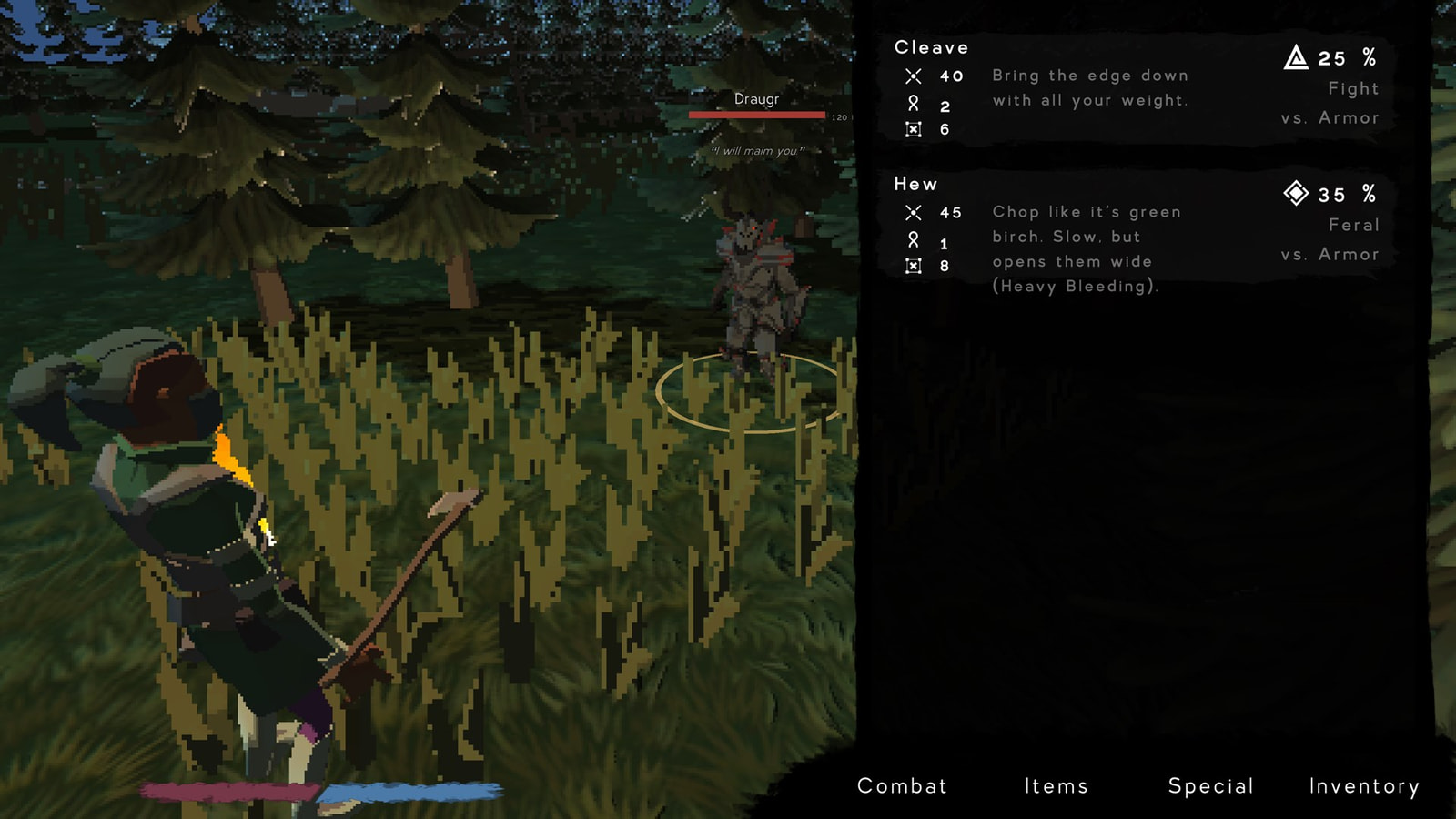 “Hew: chop like it’s green birch. Slow, but opens them wide.”
Dark on Purpose (Graphisc)
We’ll see where I end up on graphics. It is an eternal problem. For now, I press on. I am watching AI toolkits such as Meshify to see if it is a path ahead. But the darkness lends itself well to old school pixelization; like your eyes, unaccustomed to darkness, blurrying.
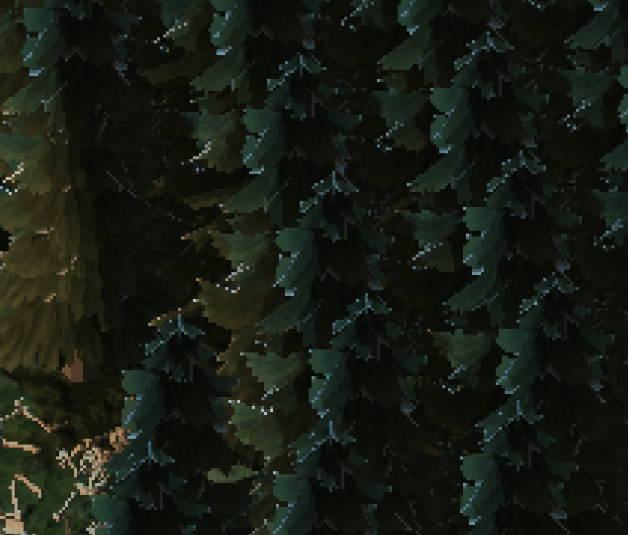 Up close, the forest is just blocks of green and black. Your head does the rest.
Don’t get me wrong, I like a retro look as much as anyone. But that’s not why it’s there. The pixels hide just enough that your imagination fills in the rest, and that suits a game about not being able to see.
I wanted a game where darkness is more than a mood. Where it decides how people live, what they believe and who they’re willing to trust. Folklore lets me write that, the voices make the player’s own head part of the story, and the Fear & Hunger harshness keeps it honest. In a world without sun, survival should cost something.
Barkbread is in development, and the Dysterskog demo is what I’m building right now. It’s fun to be back at storytelling. But now, after 9 months in one of the top AI teams in the world; I have a brand new passion how a solo developer makes a game with a team of AI agents.